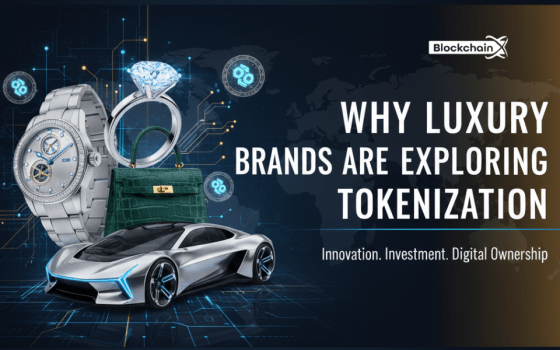
What tokenized luxury assets actually are
Tokenized luxury assets are digital tokens that represent ownership of high-value physical goods. Unlike generic non-fungible tokens (NFTs) that often represent digital art or collectibles, these tokens are linked to real-world items like luxury watches, fine art, and rare cars. This connection creates a bridge between the physical and digital worlds, allowing for fractional ownership and increased liquidity in markets that have traditionally been illiquid.
The core mechanism involves creating a digital representation of a physical item on a blockchain. This digital token serves as a certificate of authenticity and ownership. When you own the token, you effectively own a share of the underlying asset. This structure allows brands and consumers to unlock liquidity and fractional ownership, making it possible to invest in high-value items without needing the full capital upfront.
This approach distinguishes tokenized luxury market research from the broader NFT space. While generic NFTs rely on community and digital scarcity, tokenized luxury relies on provenance, authentication, and the tangible value of the underlying asset. This makes it a distinct category within the broader tokenization landscape, focused on preserving and enhancing the value of physical luxury goods through blockchain technology.
The infrastructure behind the token
Tokenizing luxury goods isn't just about minting an NFT; it's about building a legal and technical framework between the physical item and the blockchain. Without a robust infrastructure, a token is just a digital receipt with no real-world enforceability. The viability of the tokenized luxury market research sector depends on three pillars: secure custody, legal wrappers, and reliable oracles.
Secure custody and legal wrappers
The biggest hurdle in luxury tokenization is proving that the digital token actually represents the physical object. This requires a "legal wrapper"—a contractual structure that defines ownership rights. In many jurisdictions, this involves a trust or a special purpose vehicle (SPV) that holds the physical asset. Investors don't just buy a token; they buy a share of the legal entity that owns the watch, handbag, or art piece.
Custody solutions are equally critical. High-value physical assets need institutional-grade storage. This isn't a home safe; it's a bonded warehouse with insurance, climate control, and regular audits. The token's value is directly tied to the security of this physical backing. If the custody fails, the token becomes worthless.
Oracle integration and authentication
Oracles act as the bridge between the physical world and the blockchain. For luxury goods, this means integrating with authentication services. Each tokenized asset is registered on-chain, ensuring a clear ownership history that helps prevent fraud. This is where NFT authentication plays a pivotal role in luxury retail platforms.
Research indicates that NFT authentication influences purchase intention through warranting value and structural assurance. When a buyer sees a token linked to a verified, authenticated physical item, trust increases. This verification process must be seamless and immutable. If the oracle data is wrong, the entire tokenization model collapses. The infrastructure must ensure that the digital record always matches the physical reality.
Market context and volatility
The luxury market is currently undergoing a significant shift. About 20 million consumers left the luxury market in 2025, with new client acquisition declining by about 5% compared with 2024. This contraction makes efficient, fractional ownership models more attractive. Tokenization allows for greater liquidity in an otherwise illiquid market.
However, the financial infrastructure must also handle market volatility. While the physical asset may hold its value, the token's price can fluctuate based on broader crypto market trends. This disconnect requires careful management. The infrastructure needs to account for these fluctuations, perhaps through hedging mechanisms or stablecoin settlements, to protect both the issuer and the investor.
Market size and adoption trends
The broader real-world asset (RWA) sector is growing rapidly, but the specific application to luxury goods is entering a more complex phase. In 2024, the total market size of tokenized assets reached $186 billion, marking a 32% increase compared to the previous year [src-serp-3]. This growth signals strong institutional interest in digitizing tangible value, yet the luxury segment faces unique consumer headwinds that separate it from broader crypto trends.
The shifting luxury consumer
Tokenized luxury market research reveals a critical disconnect: while the infrastructure is scaling, consumer behavior is contracting. About 20 million consumers left the luxury market in 2025, with only 40% to 45% of addressable consumers making a personal luxury purchase compared to around 60% in 2022 [src-serp-5]. This decline in new client acquisition by about 5% suggests that traditional luxury brands are struggling to retain relevance with a broader demographic.
Interestingly, about 75% of global luxury purchases come from middle- and lower-income consumers earning $40K–$150K [src-serp-5]. This demographic is often more price-sensitive and less loyal to traditional brand narratives, making them ideal candidates for fractional ownership models. However, the current market contraction means that tokenization must prove its utility beyond speculation to capture this audience.
Volatility and liquidity context
The financial environment for these assets remains volatile. The following chart illustrates the recent price action of Bitcoin, which often serves as a liquidity proxy for the broader RWA and crypto-asset ecosystem. While tokenized luxury assets are not directly pegged to BTC, their market sentiment and liquidity flows are frequently influenced by the broader digital asset landscape.
Strategic implications for brands
The conversation around tokenized luxury market research often drifts into speculative trading, but the real opportunity lies in infrastructure and engagement. For luxury brands, tokenization is less about flipping digital assets and more about redefining ownership. By issuing digital tokens that represent fractional shares of high-ticket items, brands can unlock new revenue streams while deepening customer relationships.
This shift addresses a critical market reality: about 75% of global luxury purchases come from middle- and lower-income consumers earning between $40,000 and $150,000. Tokenization lowers the entry barrier, allowing these consumers to participate in luxury ownership without the full upfront cost. It transforms a static purchase into an active investment, creating a more engaged and loyal customer base.
Beyond revenue, tokenization offers a robust solution to counterfeiting. Each token can be linked to a unique physical asset, creating an immutable ledger of provenance. This transparency builds trust and protects brand integrity in an era where authenticity is paramount.
To understand the tangible differences, consider how tokenized ownership changes the dynamics of luxury acquisition compared to traditional methods.
The luxury market is contracting, and consumer behavior has shifted
The era of effortless luxury growth is pausing. Recent data indicates that approximately 20 million consumers left the luxury market in 2025, driven by economic uncertainty and a recalibration of spending priorities. Only 40% to 45% of addressable consumers made a personal luxury purchase in 2025, a significant drop from the 60% recorded in 2022. This contraction isn't just a blip; it represents a structural shift in how the middle and upper-middle classes engage with premium goods.
Traditional brand-level metrics reflect this chill. New client acquisition has declined by about 5% compared to 2024, signaling that the old funnel of aspirational marketing is leaking. Interestingly, the core of luxury demand hasn't vanished—it has just become harder to reach. About 75% of global luxury purchases still come from middle- and lower-income consumers earning between $40,000 and $150,000. These are the people who want the prestige but face tighter budget constraints and higher barriers to entry.
This is where tokenized luxury market research becomes relevant. The broader market for tokenized assets reached $186 billion in 2024, marking a 32% increase year-over-year. While this doesn't replace high-end bespoke sales, it offers a new entry point. By fractionalizing ownership, tokenization allows the 75% of consumers who are currently priced out of full ownership to participate in the luxury asset class. It transforms luxury from a one-time purchase into an accessible, liquid asset, potentially stabilizing demand as traditional acquisition channels weaken.
Frequently asked: what to check next
Strategic resources
These resources provide deeper analysis on the intersection of blockchain technology and luxury retail trends.



As an Amazon Associate, we may earn from qualifying purchases.
No comments yet. Be the first to share your thoughts!