Tokenized luxury market research: what buyers need to know
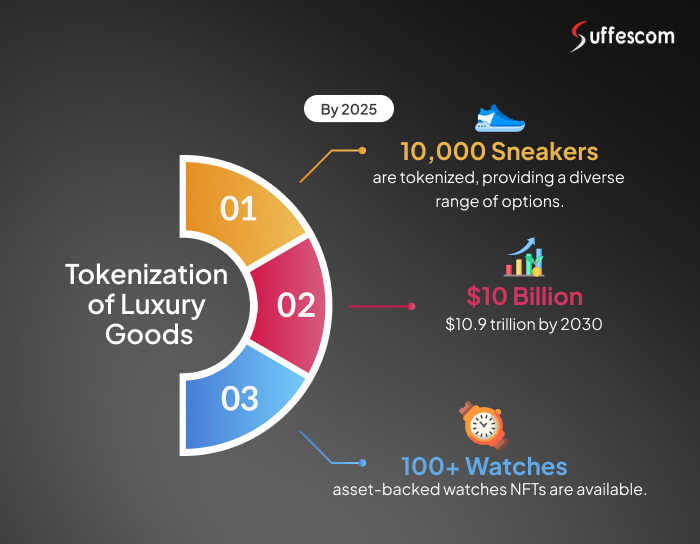
Luxury goods tokenization creates a digital representation of a physical item, capturing details like origin, materials, and ownership history on a blockchain. This process allows brands and consumers to fractionalize ownership and unlock liquidity for high-value assets like art, wine, and cars. The global market for tokenized luxury vehicles alone is projected to reach $10 billion by 2025, signaling a shift from static ownership to dynamic digital assets.
Direct answer: What is luxury goods tokenization?
At its core, tokenization converts a physical luxury asset into a digital token. This token serves as a verifiable record of authenticity and ownership. For example, a platform like Brickken enables the tokenization of luxury RWAs, allowing investors to buy fractional shares in high-value items rather than purchasing the entire asset outright. This approach democratizes access to luxury markets that were previously restricted to ultra-high-net-worth individuals.
Who is leading the tokenization space?
Several companies are driving adoption, but no single entity dominates the entire sector. Brickken is a notable player focusing on secure platforms for luxury RWAs. Meanwhile, broader RWA tokenization trends are being influenced by various blockchain networks and financial institutions integrating these assets into their portfolios. The landscape is fragmented, with different platforms specializing in specific asset classes like art or collectibles.
Where does luxury spending come from?
Understanding the buyer is critical. About 75% of global luxury purchases come from middle- and lower-income consumers earning $40K–$150K. This demographic is increasingly interested in digital ownership and fractional investment opportunities. Tokenization appeals to this group by lowering entry barriers and providing a transparent, verifiable record of ownership, which is essential for both personal enjoyment and investment purposes.
Tradeoffs by use case
| Use Case | Benefit | Tradeoff |
|---|---|---|
| Fractional Ownership | Lower entry cost, shared liquidity | Complex legal structures, regulatory uncertainty |
| Authenticity Verification | Immutable proof of origin | Dependence on accurate initial data entry |
| Investment Diversification | Access to alternative assets | Market volatility, lower liquidity for niche items |
Decision: Is it right for you?
Tokenization is best suited for investors seeking diversification beyond traditional stocks and bonds. It offers a way to invest in tangible assets with digital flexibility. However, it requires a high tolerance for regulatory risk and technological complexity. For those prioritizing stability and ease of use, traditional investment vehicles may remain preferable. The decision hinges on your appetite for innovation versus established market mechanisms.
Tokenized luxury market research choices that change the plan
Tokenizing luxury assets shifts the investment model from physical possession to digital fractional ownership. This transition unlocks liquidity for illiquid items like fine art, vintage cars, and rare wine, but it introduces distinct operational and regulatory risks. Evaluating these tradeoffs is essential for determining whether digital ownership aligns with your portfolio strategy.
The primary advantage is accessibility. Tokenization allows high-net-worth and affluent consumers to invest in premium assets with lower capital requirements. According to recent market data, approximately 75% of global luxury spending comes from consumers earning between $40,000 and $150,000 annually. Tokenization bridges the gap between this broad affluent base and high-ticket assets, potentially expanding the investor pool significantly.
However, liquidity is not guaranteed. While secondary markets exist, they often lack the depth of traditional stock exchanges. Buyers and sellers may face wider bid-ask spreads, and market volatility can be amplified by crypto market sentiment rather than the underlying asset's performance. Additionally, regulatory frameworks for real-world assets (RWA) vary by jurisdiction, creating compliance complexity for issuers and investors alike.
To navigate these variables, we compare the key operational factors across major tokenization approaches below. This comparison highlights the differences in liquidity, regulatory clarity, and asset type suitability.
| Factor | Traditional Ownership | Full Asset Tokenization | Fractional Tokenization |
|---|---|---|---|
| Liquidity | Low (private sales only) | Medium (specialized platforms) | High (secondary markets) |
| Entry Cost | High (full asset price) | High (full asset price) | Low (fractional share) |
| Regulatory Risk | Low (established law) | Medium (emerging RWA laws) | High (securities regulations) |
| Storage & Insurance | Owner responsibility | Issuer/vault managed | Issuer/vault managed |
| Price Discovery | Opaque (private comps) | Transparent (on-chain) | Transparent (on-chain) |
The choice between these models depends on your specific goals. If you seek long-term wealth preservation and have the capital, traditional ownership offers the simplest regulatory path. For investors seeking liquidity and diversification, fractional tokenization provides exposure to premium assets with lower capital outlay, provided you are comfortable with the regulatory nuances of digital securities.
Choose the next step
Tokenized Luxury Market Research works best as a clear sequence: define the constraint, compare the realistic options, test the tradeoff, and choose the path with the fewest hidden costs. That order keeps the advice usable instead of decorative. After each step, pause long enough to check whether the recommendation still fits the reader's actual situation. If it depends on perfect timing, unusual access, or a best-case budget, include a simpler fallback.
Spotting the Weak Links in Tokenized Luxury
The promise of tokenized luxury assets—fractional ownership of art, wine, and supercars—often outpaces the reality of the infrastructure. While the global market for tokenized luxury vehicles is projected to reach $10 billion by 2025, many platforms struggle with liquidity and regulatory clarity (source: rwa.io). Buyers must look past marketing claims to identify which options actually deliver on the promise of fractional ownership.
Luxury goods tokenization creates a digital representation of a physical item, embedding details about origin, materials, and ownership history into a blockchain token. This technology allows brands to verify authenticity and consumers to trade smaller shares. However, the value depends entirely on the platform's ability to maintain the link between the digital token and the physical asset.
When comparing providers, focus on their legal structure and custody solutions. Weak options often lack clear legal frameworks for fractional ownership or rely on opaque custodial arrangements. Stronger platforms integrate directly with established luxury brands and offer transparent secondary marketplaces.
The Decision Framework
| Feature | Strong Option | Weak Option |
|---|---|---|
| Legal Structure | Clear SPV or trust structure for fractional ownership | Vague terms of service; no clear asset backing |
| Custody | Audited, insured physical storage with regular verification | No public audit trail; reliance on third-party promises |
| Liquidity | Built-in secondary marketplace with verified buyers | No exit strategy; relies on peer-to-peer trading only |
| Brand Integration | Direct partnerships with luxury houses for verification | Generic verification methods; high risk of counterfeits |
Choose platforms that prioritize legal clarity and physical custody over speculative price appreciation. The token is only as valuable as the asset it represents and the legal framework protecting it.
Tokenized luxury market research: what to check next
Helpful gear
Use these product recommendations as a starting point, then choose the size, material, and price point that fit how you actually use the gear.


As an Amazon Associate, we may earn from qualifying purchases.
No comments yet. Be the first to share your thoughts!