What tokenized luxury actually means
Tokenized luxury is the fractional ownership of high-value physical assets—like fine art, luxury watches, or real estate—via blockchain technology. Instead of buying a single painting or a rare timepiece, investors purchase digital tokens that represent a share of the asset. This approach transforms tangible real-world assets (RWAs) into liquid, tradable instruments, making high-end markets accessible beyond traditional wealthy elites.
This model stands in sharp contrast to speculative NFTs, which often derive value from digital scarcity or community hype. Tokenized luxury anchors value in the physical item itself. The digital token serves as a secure, transparent record of ownership, backed by the underlying asset’s intrinsic worth. This distinction is critical for investors seeking stability rather than volatile digital collectibles.
By bridging the gap between physical luxury and digital finance, this infrastructure allows for easier liquidity, lower entry barriers, and transparent provenance. As the market matures, this framework is becoming a cornerstone for modern asset management in the luxury sector.
How tokenized luxury assets work
A tokenized luxury asset is only as strong as the bridge between the digital token and the physical item. If that bridge breaks, the token is just code. The infrastructure relies on three layers: a legal wrapper holding the title, smart contracts managing the flow of value, and oracles verifying the asset’s condition.
First, a Special Purpose Vehicle (SPV) is formed to hold legal title to the physical asset. Whether it is a high-end watch or a piece of real estate, the SPV owns the item. The investors own shares of the SPV, which are represented by tokens. This structure ensures that the digital token has a direct, enforceable legal claim to the physical luxury good.
Next, smart contracts automate the distribution of benefits. If the asset generates income, such as rental yield from property or appreciation from a collectible, the contract distributes those returns to token holders automatically. This removes the need for manual payouts and reduces administrative overhead.
Finally, oracles verify the state of the physical asset. They provide off-chain data—like authentication certificates or condition reports—to the blockchain. This ensures that the token’s value remains tied to the actual asset’s reality, not just market speculation.



As an Amazon Associate, we may earn from qualifying purchases.
Comparing top tokenization platforms
Choosing the right infrastructure for a Tokenized Luxury strategy requires looking beyond marketing promises. You need to understand which platforms actually support the specific asset classes you care about, how they handle regulatory compliance, and what their liquidity mechanisms look like. The market is still fragmented, but a few players have established clear niches.
Below is a direct comparison of leading platforms based on their primary focus areas. This isn't an exhaustive list of every startup, but it highlights the key differences between specialized luxury tokenizers and broader real estate-focused platforms.
Platform Deep Dive
Brickken has carved out a specific niche in high-value physical goods. Rather than trying to tokenize every asset class, they focus on the "luxury" segment: fine art, rare wine, and high-end vehicles. Their infrastructure is built to handle the unique custody and provenance challenges of these items. This makes them a strong candidate if your Tokenized Luxury strategy centers on collectibles rather than traditional real estate.
Stobox, on the other other hand, leans heavily into real estate and private equity. They are a Swiss-based platform with a strong emphasis on regulatory compliance, aligning with FINMA and EU MiCA standards. If your primary interest is fractional ownership of commercial or residential property, Stobox offers a more mature legal framework for that specific use case. Their minimum investment thresholds are often structured to be accessible to accredited investors, starting around $1,000 to $5,000 depending on the offering.
Securitize acts as a broader infrastructure provider. They don't just tokenize assets; they provide the underlying technology for many other platforms. Their focus is heavily on US regulatory compliance (SEC Regulation A+ and D), making them the go-to for large-scale institutional offerings. They are less of a "direct-to-consumer" luxury marketplace and more of a backend engine for major financial institutions.
Key Takeaways for Selection
When evaluating these platforms, prioritize regulatory clarity over flashy UI. In the Tokenized Luxury space, the legality of the token is more important than the ease of buying it. Ensure the platform has a clear path to secondary trading, as liquidity is the biggest risk in tokenized assets. Also, verify their custody solutions. Who holds the physical art or the deed to the building? If the answer is vague, proceed with caution.
Market research and liquidity realities
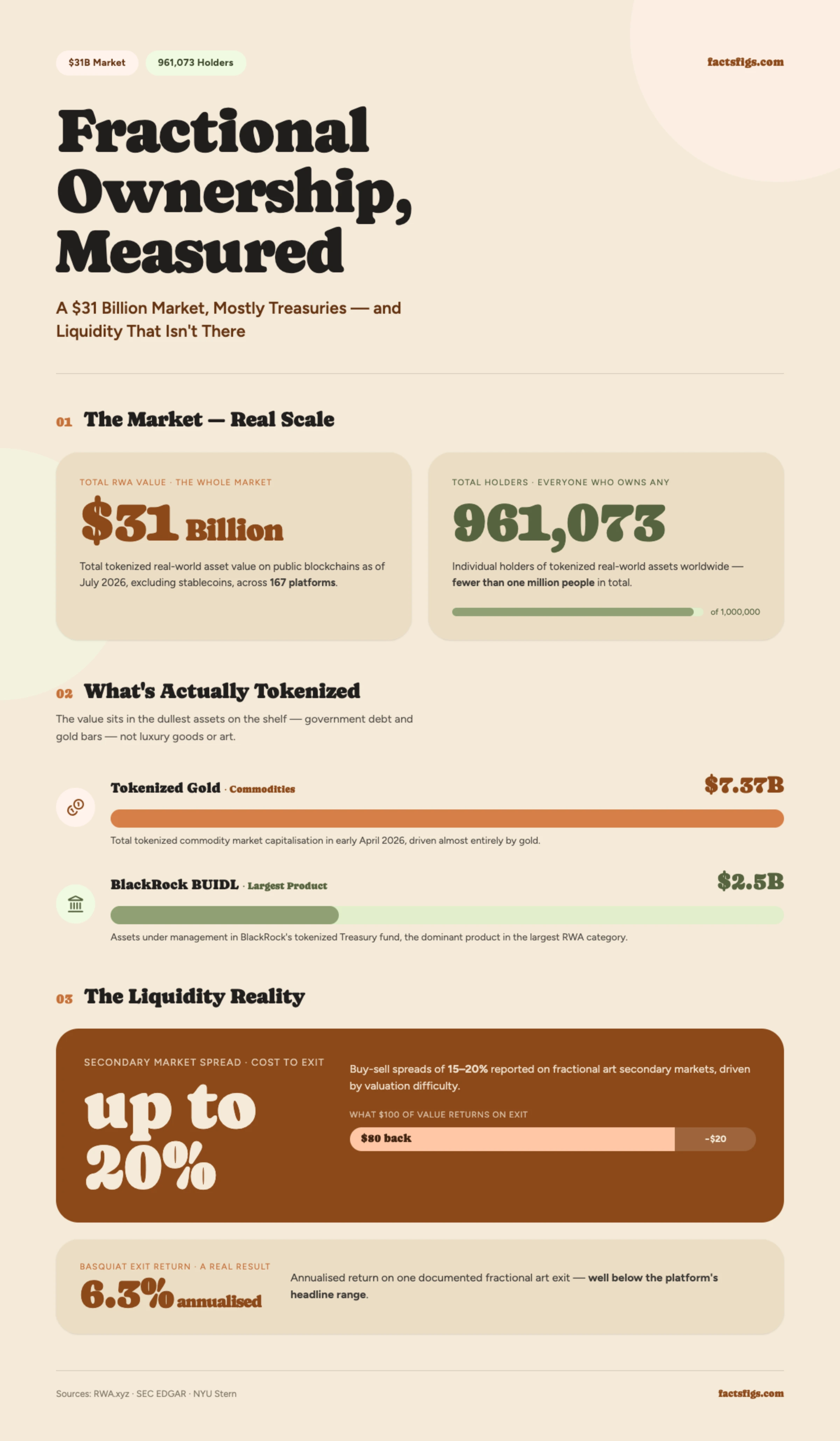
The tokenized luxury market is currently defined by a stark imbalance between primary issuance and secondary trading volume. While platforms are successfully issuing fractional shares of high-value assets like fine watches and real estate, the ecosystem for reselling these tokens remains underdeveloped [src-serp-1]. This liquidity gap creates a unique risk profile: investors may find it difficult to exit positions quickly without accepting significant discounts, a reality that distinguishes this asset class from traditional equities.
Institutional players are driving the initial infrastructure build-out, focusing on compliance and custody solutions rather than retail-facing liquidity engines. Reports from firms like Chainlink, BCG, and Paxos highlight that the current priority is establishing trust and regulatory clarity [src-serp-8]. Consequently, retail participation is often limited to holding periods that mimic traditional illiquid assets, despite the theoretical promise of fractional ownership.
To understand the broader market sentiment, it is useful to look at how tokenized real-world assets (RWAs) correlate with broader crypto markets. The following chart tracks the performance of a major RWA-focused index, providing context for how institutional capital flows into this sector.
For a quick snapshot of current market valuation, the price widget below reflects the live status of a representative RWA token. This data point helps ground the analysis in real-time market conditions rather than theoretical projections.
Risks and regulatory hurdles in the tokenized luxury market
While the potential for fractional ownership is compelling, the tokenized luxury sector operates in a regulatory gray area that poses significant risks to investors. Unlike traditional securities, the legal status of digital ownership rights for physical assets like art, wine, or real estate varies wildly across jurisdictions. In many regions, there is no clear precedent for how courts will handle disputes over tokenized assets, leaving buyers vulnerable if the custodian of the physical item fails or if the underlying legal structure is challenged.
Custody remains another critical vulnerability. When you buy a tokenized watch or painting, you are not holding the physical item; you are holding a claim against a custodian who stores it. If that custodian lacks adequate insurance, proper security protocols, or transparent audit trails, your investment could become worthless regardless of the token’s blockchain integrity. The link between the digital token and the physical asset is only as strong as the weakest link in the physical supply chain.
Liquidity risk is also more pronounced in niche luxury markets than in standard crypto assets. While secondary markets for tokenized goods are growing, they are often thin and illiquid. If you need to exit a position quickly, you may find no buyers, or you may have to sell at a steep discount. This is particularly true for highly specialized assets where the pool of qualified buyers is small. Unlike selling a stock on a major exchange, selling a tokenized piece of real estate or a rare vintage car can take weeks or months, during which market conditions can shift dramatically.
To stay informed about broader market trends that impact these niche assets, you can monitor general crypto market sentiment using live data widgets below. This helps contextualize how macro-economic shifts might affect liquidity in the tokenized luxury space.
Evaluate tokenized luxury investments with a clear workflow
Before committing capital, treat the due diligence process like a forensic audit. You are not just buying into a luxury item; you are buying into a legal structure and a technology stack. A failure in either can freeze your assets or invalidate your ownership claims.
No comments yet. Be the first to share your thoughts!