The rise of tokenized luxury infrastructure
Tokenized luxury infrastructure sits at the intersection of real-world asset (RWA) tokenization and high-value asset financing. This sector converts illiquid, high-net-worth items—such as fine art, vintage wine, and classic automobiles—into digital tokens on a blockchain. The result is a new market layer where fractional ownership meets institutional-grade compliance, creating liquidity for assets that have historically been difficult to trade.
In 2026, this infrastructure is no longer experimental. Platforms like Brickken and Securitize are providing the regulatory rails necessary to tokenize equities, funds, and physical luxury goods. Securitize, for instance, offers end-to-end services including issuance, compliance, and investor onboarding, ensuring that these digital representations of physical value meet legal standards. This shift allows a broader pool of investors to participate in markets previously reserved for ultra-high-net-worth individuals.
The macro backdrop for this growth is visible in the broader crypto market. As liquidity cycles expand, capital flows into assets that offer both yield and tangible backing. The technical performance of major crypto assets often serves as a leading indicator for risk appetite in the RWA space.
While the benefits include increased accessibility and liquidity, the sector faces distinct challenges. Regulatory oversight and cyber security risks remain higher than with traditional asset classes. Investors must navigate a landscape where the digital token is only as secure as the legal framework backing the underlying physical asset.
How on-chain credit changes luxury liquidity
Owning a physical luxury asset is a static position. You hold the item, it appreciates or depreciates, but your capital remains locked in the object. Tokenization breaks this lock by converting the physical item into a digital representation on a blockchain. This digital twin can then be used as collateral for on-chain credit, effectively turning a dormant asset into active liquidity without requiring a sale.
The mechanism is straightforward. A luxury good, such as a rare watch or handbag, is authenticated and tokenized. Each token represents a share of the underlying asset. These tokens are registered on-chain, creating an immutable ownership history that helps prevent fraud and ensures clear provenance. Once the tokens exist in a digital wallet, they can be deposited into a decentralized lending protocol. The protocol evaluates the token's value and issues stablecoin loans against it.
This shift from illiquid ownership to liquid leverage fundamentally changes how luxury assets function in a portfolio. Traditionally, accessing cash from a luxury item meant selling it, often at a loss or with significant friction. With on-chain credit, you retain ownership of the token and the underlying asset while accessing capital for other investments or expenses. The asset continues to work for you, even while you borrow against it.
| Feature | Traditional Luxury Ownership | Tokenized On-Chain Credit |
|---|---|---|
| Liquidity | Low; requires finding a buyer | High; instant access to capital |
| Settlement | Slow; days or weeks | Instant; blockchain speed |
| Ownership | Retained only if not sold | Retained while borrowing |
| Fraud Risk | Higher; physical verification needed | Lower; on-chain provenance |
The result is a more dynamic market where luxury goods are not just collectibles but functional financial instruments. This infrastructure allows investors to leverage their holdings without disrupting their long-term strategies.
Key platforms driving the tokenized luxury market
The infrastructure supporting tokenized luxury assets is rapidly maturing, shifting from experimental pilots to specialized platforms built for high-value real-world assets. These platforms provide the necessary technical and compliance layers to convert physical items—such as fine art, classic cars, and rare spirits—into liquid digital tokens. For investors, choosing the right platform is as critical as selecting the asset itself, as it determines liquidity, security, and regulatory safety.
Brickken: Specialized RWA Infrastructure
Brickken operates as a dedicated infrastructure provider for tokenizing real-world assets (RWAs). Rather than acting as a marketplace for end-users, Brickken provides the underlying technology that allows other platforms to tokenize assets like art, wine, and automobiles. This approach ensures that the tokenization process is secure and compliant, creating liquidity and fractional ownership for high-value items. By focusing on the backend, Brickken enables a broader ecosystem of luxury tokenization services without directly competing with asset issuers.
Lympid: Physical Asset Tokenization
Lympid offers a comprehensive solution for tokenizing any physical asset, ranging from luxury watches and collectibles to handbags and classic cars. The platform handles the entire lifecycle of an asset, from physical verification and storage to the issuance of digital tokens on the blockchain. This end-to-end service is particularly valuable for niche luxury markets where authenticity and provenance are paramount. Lympid’s infrastructure allows collectors to realize the value of their physical holdings by converting them into tradable digital assets.
Securitize: Institutional-Grade Compliance
For high-stakes luxury assets that may fall under securities regulations, Securitize provides an institutional-grade platform. Recognized as one of the most trusted names in digital asset securities, Securitize enables the tokenization of equities, funds, and real-world assets with full regulatory compliance. The platform offers end-to-end services, including issuance, investor onboarding, and secondary trading. This makes it the preferred choice for luxury assets that require strict adherence to financial regulations, ensuring that tokenized ownership is legally robust and secure.
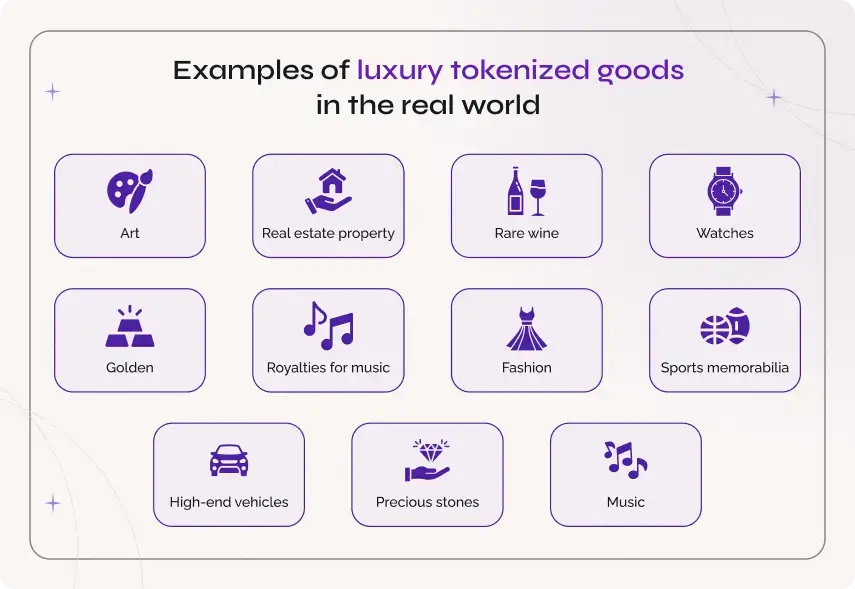
Commonly Tokenized Luxury Items
The following high-end luxury items are frequently tokenized across these platforms, serving as concrete examples of the market’s potential.


As an Amazon Associate, we may earn from qualifying purchases.
Regulatory risks and valuation challenges
Tokenized luxury infrastructure operates in a regulatory gray zone that traditional finance has not yet fully mapped. While platforms like Securitize provide end-to-end compliance for institutional tokens, the broader market faces significant uncertainty. The Global Association of Risk Professionals (GARP) warns that fractional ownership through tokenization introduces higher regulatory and cyber risks than traditional asset holding. This means that while the technology creates liquidity, it also exposes investors to a legal landscape that varies wildly by jurisdiction.
Valuing these assets on-chain presents a different kind of friction. Luxury goods—whether rare watches, fine art, or vintage cars—are inherently illiquid and subjective. There is no centralized exchange that sets a real-time price for a 1960s Rolex Daytona or a specific Picasso sketch. When you tokenize these items, you are essentially creating a derivative of an asset that does not trade daily. This disconnect between the token’s price and the underlying asset’s true market value creates a valuation gap that algorithms struggle to bridge.
The lack of standardized appraisal protocols for on-chain luxury assets means that valuations can be arbitrary. Unlike stocks, where earnings and revenue provide a baseline, luxury assets rely on provenance, condition, and market sentiment. If the underlying asset is damaged, stolen, or authenticated incorrectly, the token’s value can collapse to zero overnight. This binary risk profile—where the digital claim is only as good as the physical reality—remains the primary hurdle for mass adoption in the tokenized luxury sector.
Strategic outlook for tokenized luxury assets
Tokenized luxury infrastructure is shifting from experimental pilots to a structured market layer. The primary driver is not speculation but the need for transparent, liquid ownership in high-value, illiquid assets. As regulatory frameworks mature, the focus moves toward compliance-ready platforms that can handle fractional ownership without sacrificing security.
The next phase will likely see consolidation among tokenization platforms. Early movers like Securitize are establishing the standard for end-to-end issuance and secondary trading. Investors should look for platforms that offer full regulatory compliance, investor onboarding, and clear audit trails. The goal is to reduce friction while maintaining the integrity of the underlying asset.
For investors, the opportunity lies in understanding the infrastructure itself. This includes the blockchain protocols, the legal wrappers, and the custodial solutions. The market is moving toward a model where tokenized assets are treated with the same rigor as traditional securities. This shift will attract institutional capital and drive deeper liquidity.
Pre-investment checklist
Before allocating capital to tokenized luxury assets, verify the following:
- Regulatory Compliance: Ensure the platform operates within a recognized legal framework and offers clear investor protections.
- Custody Solutions: Confirm that the underlying assets are held by reputable, insured custodians.
- Liquidity Mechanisms: Understand how secondary trading works and whether there are active market makers.
- Transparency: Look for real-time audit trails and clear reporting on asset performance.
- Platform Reputation: Choose established platforms with a track record of secure operations and regulatory adherence.
Common questions about luxury tokenization
Investors exploring tokenized luxury infrastructure often encounter specific hurdles regarding regulation, technology, and market access. Below are answers to the most frequent questions derived from current market data and user search intent.
Is XRP tokenizing real-world assets?
Yes, the XRP Ledger (XRPL) has emerged as a significant platform for real-world asset (RWA) tokenization. Recent data indicates that total value locked in RWAs on the XRPL has surpassed $3 billion, reflecting a 59% increase in a single month with over 290 active projects. This growth highlights the network’s capacity to handle high-volume, low-cost settlements for luxury and institutional assets. For current market context, see the XRP price widget below.
What is tokenized infrastructure?
Tokenized infrastructure refers to the use of blockchain technology to represent ownership or value of physical assets—such as real estate, art, or commodities—as digital tokens. This process allows for fractional ownership, enabling a broader pool of investors to participate in markets traditionally reserved for high-net-worth individuals. It also enhances liquidity by allowing these assets to be traded more easily on secondary markets, though it introduces new regulatory considerations.
What is the downside of tokenization?
While tokenization increases accessibility, it also introduces higher regulatory and cyber risks compared to traditional asset holding. Because these assets exist on public or permissioned blockchains, they are subject to evolving compliance frameworks that vary by jurisdiction. Additionally, smart contract vulnerabilities and cybersecurity threats pose significant risks that do not exist in traditional, physical asset management. Investors must carefully evaluate the legal structure and security protocols of any tokenization platform.
What is the best company for tokenization?
Securitize is widely recognized as a leading platform for tokenizing equities, funds, and real-world assets. The company provides end-to-end services, including issuance, compliance, investor onboarding, and secondary trading, all while maintaining full regulatory adherence. For institutions seeking a secure and compliant entry into the RWA market, Securitize offers a robust infrastructure that bridges traditional finance with digital asset capabilities.
No comments yet. Be the first to share your thoughts!